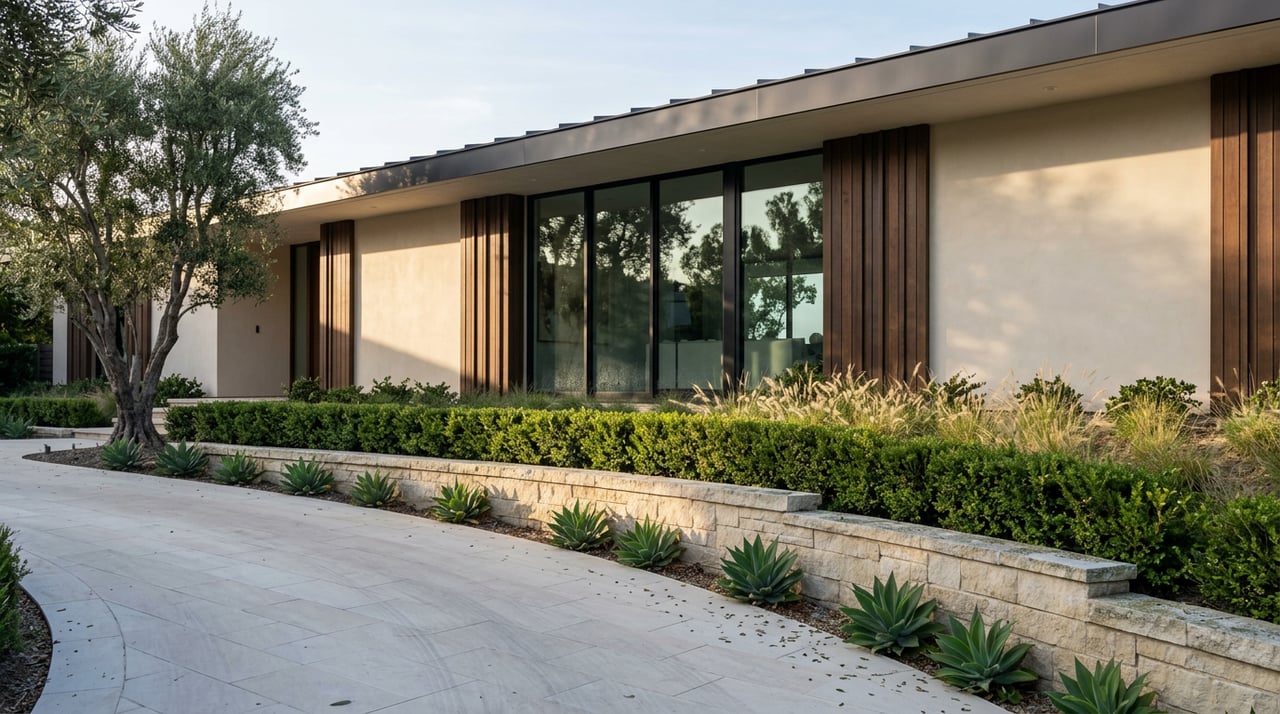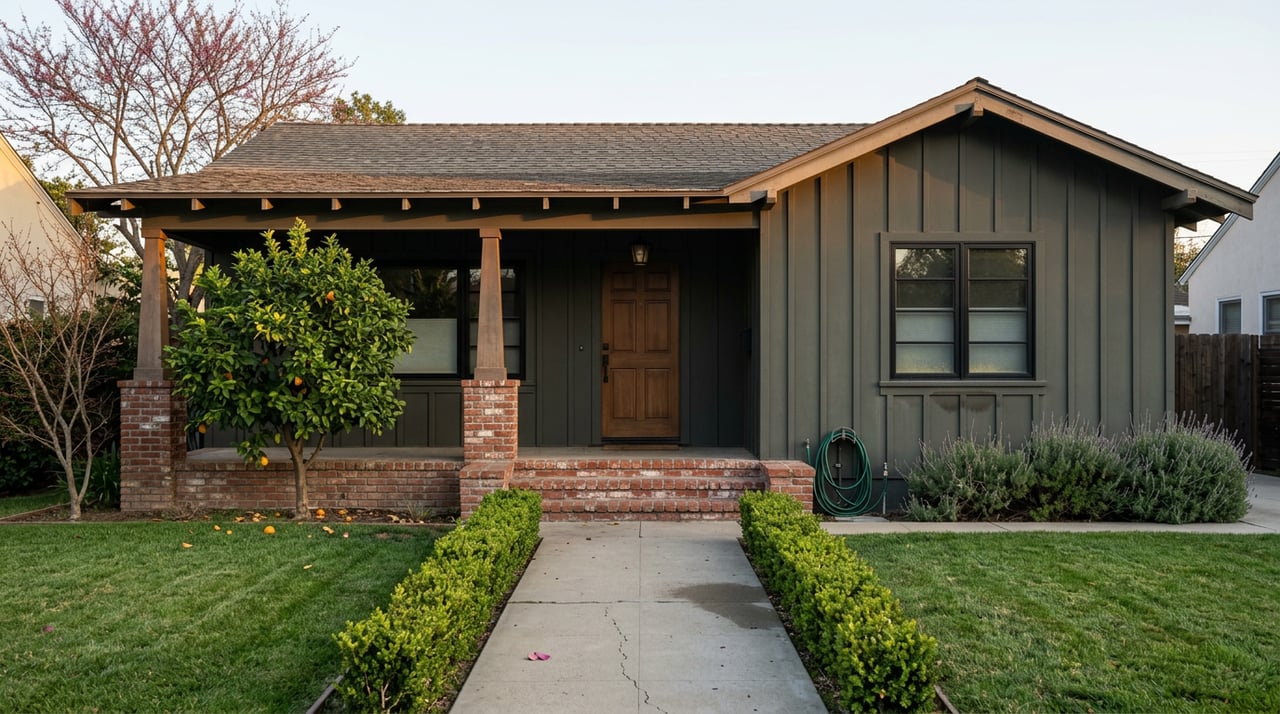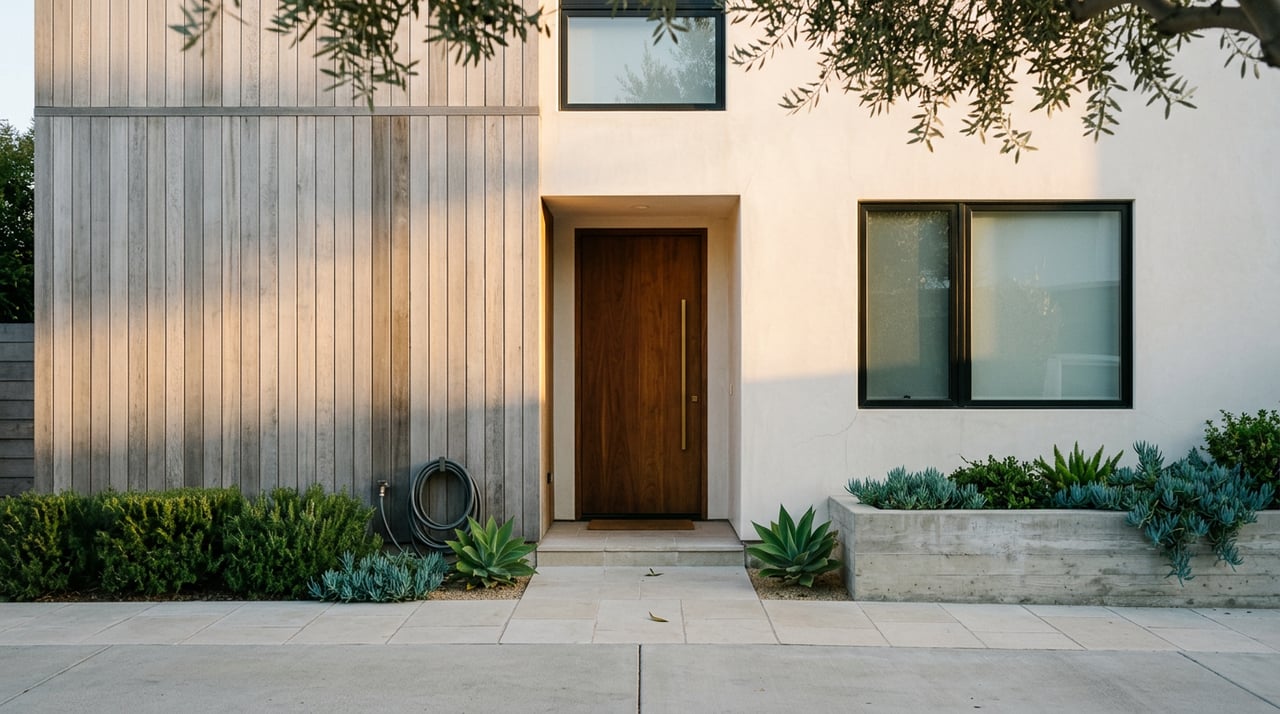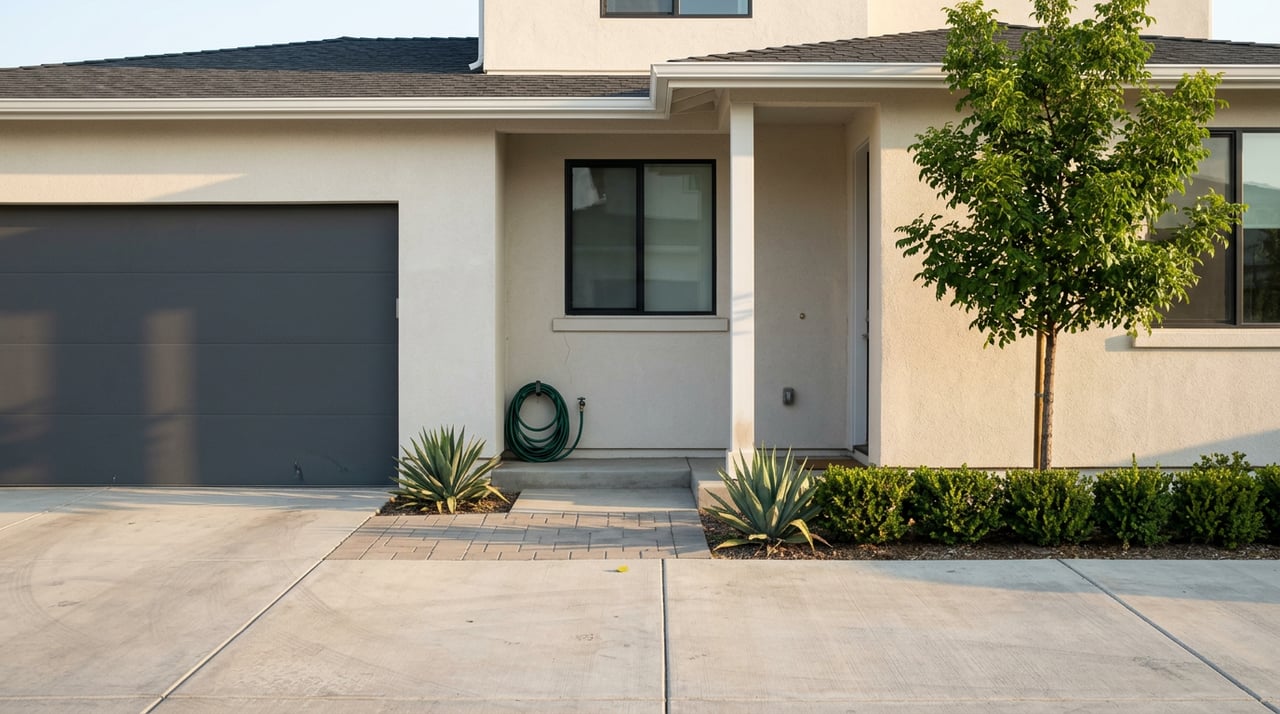
Picture two new-construction homes in North Fontana, both listed within a few thousand dollars of each other, both three-bedroom, two-story plans, both closing this fall. One sits in a gated pocket near The Arboretum. The other sits a few streets over near Heritage Village. On paper, the monthly payment looks nearly identical. It isn't, and the difference has nothing to do with the house.
It has to do with what's attached to the dirt underneath it.
The number that arrives after you've already fallen for the house
New construction in Fontana almost always comes with a Community Facilities District, better known as Mello-Roos. That much shows up in most builder conversations. What doesn't always come up early is that California Civil Code Section 1102.6 requires the seller to hand you a formal Notice of Special Tax, and that notice often lands well into escrow rather than before you write an offer, according to Fontana's own city government page on CFDs. By the time you're reading the fine print, you've already picked out paint colors.
That timing gap is the whole problem. A buyer comparing two similarly priced homes across North Fontana is comparing sticker prices, not carrying costs, because the carrying cost hasn't been disclosed yet.
Why the tax exists in the first place
Fontana's city page spells out the mechanism plainly: developers are required to build the streets, sewers, and storm drains that a new subdivision needs, and rather than fold that cost into the sale price up front, many developers form a CFD so the bond pays for the infrastructure and the buyer pays it off over time through an annual special tax. The district can levy that tax until the bond principal and interest are retired, which in Fontana typically runs about 30 years.
In plain terms, the CFD is a financing tool that keeps the advertised price lower today in exchange for a tax obligation attached to the property for decades. That trade can be perfectly reasonable. It only becomes a problem when a buyer assumes the sticker price is the whole cost of the house.
What the stack actually costs
Mello-Roos tax bills vary enormously by district, but industry guidance from 2025 and 2026 gives a workable range: annual amounts run from roughly $360 in older, smaller districts to more than $10,000 in larger, newer developments in high-growth areas, according to JVM Lending's 2026 Mello-Roos guide. The same guide notes that in CFD-heavy zip codes, the effective property tax rate, meaning the base 1 percent plus every local add-on including Mello-Roos, can reach 1.5 to 1.7 percent of the purchase price, compared with 1.1 to 1.3 percent in areas without a CFD.
Run that against a real North Fontana number. Sierra Lakes homes sold for a median of roughly $719,500 to $720,000 over the trailing 12 months, and were listing to buy at a median of $699,000 as of February 2026. Apply the effective-rate ranges to a $720,000 purchase price and a non-CFD home lands around $7,920 to $9,360 a year in total property tax, while a CFD-heavy home lands around $10,800 to $12,240 a year. Depending on where each home falls inside those ranges, the gap runs anywhere from about $120 to $360 a month, on a home priced exactly the same.
Two houses. Same money down. Same loan amount. Different monthly obligation, and the difference never shows up on the builder's price sheet.
The layer almost nobody asks about
Here's the part that catches even careful buyers off guard: the city-level CFD is often not the only one attached to a parcel. School districts can form their own Community Facilities Districts too, and they operate independently of any city infrastructure CFD covering the same land.
A public Mello-Roos bond disclosure filing lists a long roster of active Inland Empire districts, including several carrying the Fontana name directly: Fontana CFD No. 7, No. 11, No. 12, No. 22, No. 31, No. 37, No. 70, No. 71, No. 74B, No. 80, and No. 81, alongside a separate Etiwanda School District CFD No. 9, according to a public Mello-Roos bond disclosure listing. Etiwanda School District serves several North Fontana neighborhoods, including Heritage Village, which sits inside its attendance boundaries. That's a separate governing body from the City of Fontana, with the authority to levy its own special tax on top of whatever the city's infrastructure CFD is already charging.
None of this means every North Fontana parcel is double-stacked. It means the risk is structural, not hypothetical, and the only way to know for certain is to check the specific parcel, not the neighborhood in general.
Where this shows up right now
As of August 2026, the active new-construction pipeline in Fontana runs through communities where this matters most: The Arboretum's Marigold, Iris, and Flora neighborhoods in North Fontana, Rosewood at Sierra Vista, Citrus & Summit, and the Paloma and Aurora phases at Summit Park. These are exactly the kind of ground-up master-planned developments that typically need a CFD to fund the initial infrastructure, and exactly the kind of developments where a school district CFD is most likely to layer on top of a city one, simply because the land is being built out for the first time in decades.
If you're touring model homes in any of these communities, the question to ask isn't "is there a Mello-Roos tax." It's "how many CFDs are attached to this specific lot, and what's the combined annual number."
What to check before you write the offer
- Ask the builder's sales counselor for a combined special tax disclosure that shows every CFD attached to the lot, not just the primary one. Some sales offices will hand you the city CFD number without volunteering the school district figure unless you ask directly.
- Request the preliminary title report early. It will list every lien and special tax attached to the parcel, including CFDs formed by entities other than the city.
- Ask your lender to run the combined annual special tax through your debt-to-income calculation before you're locked into a purchase agreement. A few hundred dollars a month in Mello-Roos counts against your qualifying ratio the same way your mortgage payment does.
- Convert whatever annual number you're given into a monthly figure and compare it against the same math on a resale home nearby that isn't in a CFD. That's the real apples-to-apples comparison, not the sticker price.
FAQ
Does a Mello-Roos tax in Fontana ever go away? It runs until the CFD bond's principal and interest are paid off, which Fontana's city page states is typically about 30 years. Some districts continue collecting a smaller charge afterward if the CFD was also set up to fund ongoing maintenance like landscaping or street lighting.
Can I find out if a specific address carries more than one CFD before I make an offer? Yes. A parcel-level lookup through the county, a request to the title company, or a direct ask to the builder's sales office can surface every CFD attached to a lot. The Civil Code 1102.6 notice will eventually confirm it, but there's no reason to wait for escrow to ask.
Can the Mello-Roos amount increase after I close? It depends on the district's formula. Some CFDs hold the tax flat, others allow scheduled increases within a set cap. This is exactly the kind of detail worth confirming in writing before you remove contingencies, not after.
If you're weighing a new-construction lot in North Fontana against a resale home a few miles away, the sticker price is the least useful number in the comparison. Nicholas Cardenas works Fontana's new-build corridor regularly and can pull the actual combined special tax disclosure on a specific lot before you write an offer, not after. You can browse current Fontana homes for sale, read more on living in Fontana as a commuter homebuyer, or request a free home consultation to get the real number before you fall for the house.