Most buyers hear about Pasadena's Mills Act the same way: a friend mentions their neighbor cut their property tax bill in half, someone forwards a link to the city's program page, and the number that sticks is the historical average of a 51 percent reduction. That number is real. It is also the wrong number to build an offer around, because the Mills Act does not lower taxes the same way for every buyer of the same house. It lowers them based on when you close, what you paid, and what the county assessor's income model returns against your new Proposition 13 base.
The friction shows up under contract, not on the tour. This guide walks through the four Pasadena-specific rules that decide whether a landmark-district home is a tax opportunity or a set of preservation obligations attached to a bill that would have been lower anyway.
First, the designation question the listing rarely answers cleanly
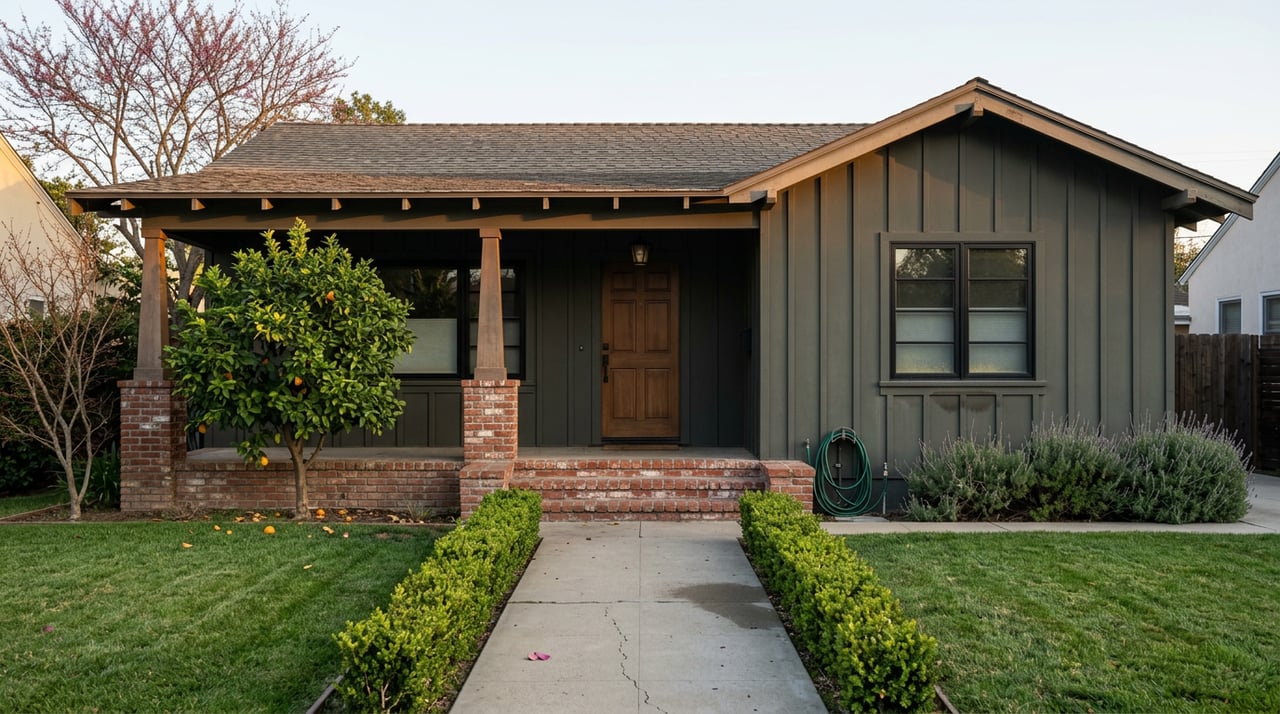
Pasadena recognizes historic property at three different levels, and the distinction changes what you can and cannot do after closing. There are more than 25 local landmark districts in the city, plus individually designated landmarks and properties that only appear on a citywide survey. Inside a district, each home is classified as either contributing or non-contributing, and only contributing resources in a local historic district or individually designated landmarks are typically eligible for a Mills Act contract.
The named districts a Pasadena buyer is most likely to encounter:
- Bungalow Heaven, the city's first landmark district, designated in November 1989, with 1,139 properties centered on McDonald Park.
- Historic Highlands, currently the second-largest with 479 properties.
- Garfield Heights, registered as a tract in 1904 and designated a landmark district in 1998.
- Washington Square, roughly 250 homes built between 1910 and 1940.
- Banbury Oaks, where three houses on Sunset Avenue between Glorieta and Hammond chose not to be included, so parcel-by-parcel status matters.
- Orange Heights-Barnhart, added to the National Register on September 29, 1995.
- Madison Heights, where a landmark-district petition is active and, if approved, would become the city's second-largest behind Bungalow Heaven.
Ask the seller, then confirm with Pasadena Planning, whether the specific parcel is contributing, non-contributing, individually landmarked, or only surveyed. The answer changes the rest of this post.
The rule the SB 9 crowd walks into
California's SB 9 has been marketed heavily to buyers looking to split a lot or add a second unit through ministerial approval. Inside Pasadena's historic districts, that path is generally closed. SB 9 provides ministerial approvals for urban lot splits and up to two units on a parcel, but parcels located within a historic district or on a site designated as a local landmark are generally exempt from those ministerial pathways. The Madison Heights association describes the exemption as one of the main reasons neighborhoods pursue landmark status in the first place, since the state recognizes the civic and cultural importance of protecting historic architectural resources, and SB 9 includes an exemption for landmark districts and other historic landmarks.
If your purchase pencils only because you assumed a duplex conversion or a lot split, you need to know this before your inspection contingency expires, not after. ADUs are still on the table, but a unit visible from the street can be pulled into design review, so treat the ADU timeline as a design question, not a permit question.
The Certificate of Appropriateness timeline that eats renovation plans
Interior work, routine maintenance, and paint color are typically exempt from historic review in Pasadena. Street-visible exterior work is not. Window replacement, front porch reconstruction, siding, new garages, and additions all fall under Certificate of Appropriateness review before a building permit can be issued. The city commonly estimates about two months for COA review, with staff-level approvals moving faster and Commission-level reviews taking longer.
Two practical consequences for a buyer:
- If you plan to live in the house during renovation, the two-month clock for a visible project runs before the permit clock starts. Budget it into your move-in date.
- If the seller made undocumented exterior changes, those changes may still need to be reconciled. Ask for the property's permit and COA history from the city before you release contingencies.
There is one under-used offset. For historic buildings, the city is authorized to use the State Historical Building Code, an alternative code that allows limited modifications to current building code standards, and properties proposing an addition can request a waiver of the two-car parking requirement. A period-experienced architect knows how to use both.
The Mills Act math that depends on when you bought
Here is the piece most guides skip. The Mills Act lowers your assessed value by having the Los Angeles County Assessor use an income-based approach that can produce a lower assessed value than a market-based approach. But your baseline without the Mills Act is not the market value. It is your Proposition 13 base-year value, which is roughly your purchase price, adjusted by up to 2 percent per year.
That means the Mills Act helps a recent buyer at a high purchase price and often does nothing for a long-tenured owner at a low Prop 13 base. Pasadena is direct about this. The city notes there is no guaranteed savings, the assessed value is reviewed annually and can change based on factors like rent, expenses, and interest rates, and historically owners who did realize savings saw an average property tax reduction of 51 percent, but results vary widely by property. The important sentence is the next one: for long-time owners who already benefit from a relatively low Proposition 13 base-year assessment, the Mills Act may provide little benefit, or in some cases a higher Mills-based assessed value than your current one.
The South Pasadena program page states the pattern plainly for the neighboring city: owners with comparatively low property taxes from Prop 13 limits will not likely benefit, and in general owners who benefit most from a Mills Act contract are those who have acquired their properties in the last 10 years. Pasadena's program is administered separately, but the assessor math is the same.
Two rough scenarios, using publicly reported Pasadena price levels to keep the arithmetic honest. Redfin reported a Pasadena median sale price of $1.2M over the three months ending May 2026, so a mid-market contributing bungalow is a realistic anchor.
| Buyer profile | New Prop 13 base | Likely Mills outcome |
|---|---|---|
| 2026 buyer at $1.4M contributing home | $1.4M | Income-based valuation often lands well below $1.4M, so the contract can produce a meaningful reduction. |
| 1998 owner of the same home | Roughly indexed from a late-90s purchase price | Mills-based value may exceed the current Prop 13 assessment, so signing can raise the bill. |
The lesson is not that the Mills Act is a bad program. It is that its value transfers unevenly across a sale. A seller quoting their own tax savings is describing their base, not yours.
The two dates that decide the calendar
Two more numbers that only surface once you are actually in the process. First, capacity. The city is allowed to enter into historic property contracts with 20 single-family properties per year. Applications are cycled annually, so a mid-year offer may not translate into a contract that fall.
Second, recordation timing. Pasadena states that once a Mills Act contract is signed and recorded, the Los Angeles County Assessor performs the tax calculation, and if recordation happens by December 31, the reduced assessment is typically reflected on the following fall tax bill. Miss the December 31 cutoff and you carry an extra tax year at the higher base. If the Mills Act was central to your affordability model, that gap is not academic.
There is also a valuation ceiling most buyers do not see coming. The contract is limited to property valued below $1.5 million, with some exceptions. In a city where the citywide median sale price sat at $1.2M for the three months ending May 2026, plenty of contributing homes clear that ceiling on purchase alone, and the exceptions become the conversation.
What a Mills Act contract actually binds you to
Contracts run with the land, which is why they matter to buyers even if the seller signed them. Mills Act contracts generally run with the land and transfer to the new owner, and you should read the contract and confirm transfer steps, maintenance duties, and tax impacts with the city. Terms are ten years minimum and auto-renew annually unless canceled.
The cancellation penalty is where casual sellers get caught. If the city finds a breach, the contract can be canceled and the owner may owe a cancellation fee equal to 12.5 percent of the property's current value as determined by the county assessor. On a $1.4M home, that is a $175,000 line item. It is not a fee you want to discover in disclosure review.
A short checklist for the ten days after acceptance
- Pull the parcel from the city's historic resources database and confirm contributing vs. non-contributing status.
- Request the full permit and Certificate of Appropriateness history from Pasadena Planning.
- Ask the seller for the recorded Mills Act contract, the approved maintenance plan, and any inspection correspondence.
- Ask the LA County Assessor for the current assessed value and model what an income-based valuation might return against your purchase price.
- If you had SB 9 or ADU plans, walk them past the Design and Historic Preservation counter before your contingency expires.
FAQ
Does designation change what I'm allowed to use the property for? No. The city's historic preservation incentives page explains that designation does not change the permitted use of the property under zoning. Designation adds review requirements for certain kinds of work, not use restrictions.
Is paint color reviewed? Paint color is typically exempt from historic review in Pasadena, but confirm with city staff that your specific project is outside the COA scope.
Can I take over an existing Mills Act contract at close? Generally yes, but read it first. Confirm the maintenance schedule, the remaining term, and how the assessor is currently valuing the property. Your Prop 13 base after transfer changes the math the previous owner was working from.
How long does a new Mills Act application take? Plan on several months. Historic Preservation Commission review at a public hearing is followed by City Council consideration, and after approval the contract is executed and recorded with the County Recorder. The 20-contract annual cap and the December 31 recordation cutoff mean timing matters as much as approval.
If you are writing an offer on a Pasadena landmark home this quarter, or preparing to list one, the diligence above is the difference between a contract that works for you and one you inherit at the wrong end of the math. Reach out to Nicholas Cardenas to request a free home consultation and walk through the parcel-specific questions before your contingencies run.